Jacksonville Water Damage Restoration
IICRC-certified water damage restoration across Jacksonville’s tidal river floodplain and historic neighborhoods — specialists in St. Johns River flooding, Irma-legacy damage, and the 1900s-era housing stock of Riverside, Avondale, and Springfield. 60-minute response citywide.
Why Call Us First?
- →St. Johns River surge + tidal specialists
- →60-min to Riverside/Avondale & San Marco
- →Historic home non-destructive drying
- →Zone AE flood documentation
- →Irma-legacy damage assessment
- →All Duval County carriers accepted
Quick Answer
The Florida Restoration Pros provides 24/7 emergency water damage restoration in Jacksonville, FL — with deep expertise in the St. Johns River tidal flooding that has affected San Marco, Riverside, Avondale, and Mandarin since Hurricane Irma (2017) set flood records unseen since 1846. We also specialize in Jacksonville’s aging historic housing stock — the oldest-standing residential buildings in Florida. Call (904) 371-7252 now.
The St. Johns River: Jacksonville’s Year-Round Flood Engine
The St. Johns River is unlike any other waterway in Florida. It is wide, slow-moving, and tidal — influenced by Atlantic tides as far as 65 miles inland. It flows northward, the only major river in the eastern US to do so, and drains a 9,800-square-mile basin that encompasses much of northeast Florida. In practical terms for homeowners: the river backs up during every astronomical high tide, every nor’easter, and every heavy rain event that fills its tributaries. Flood risk along the St. Johns is a year-round reality, not a seasonal event.
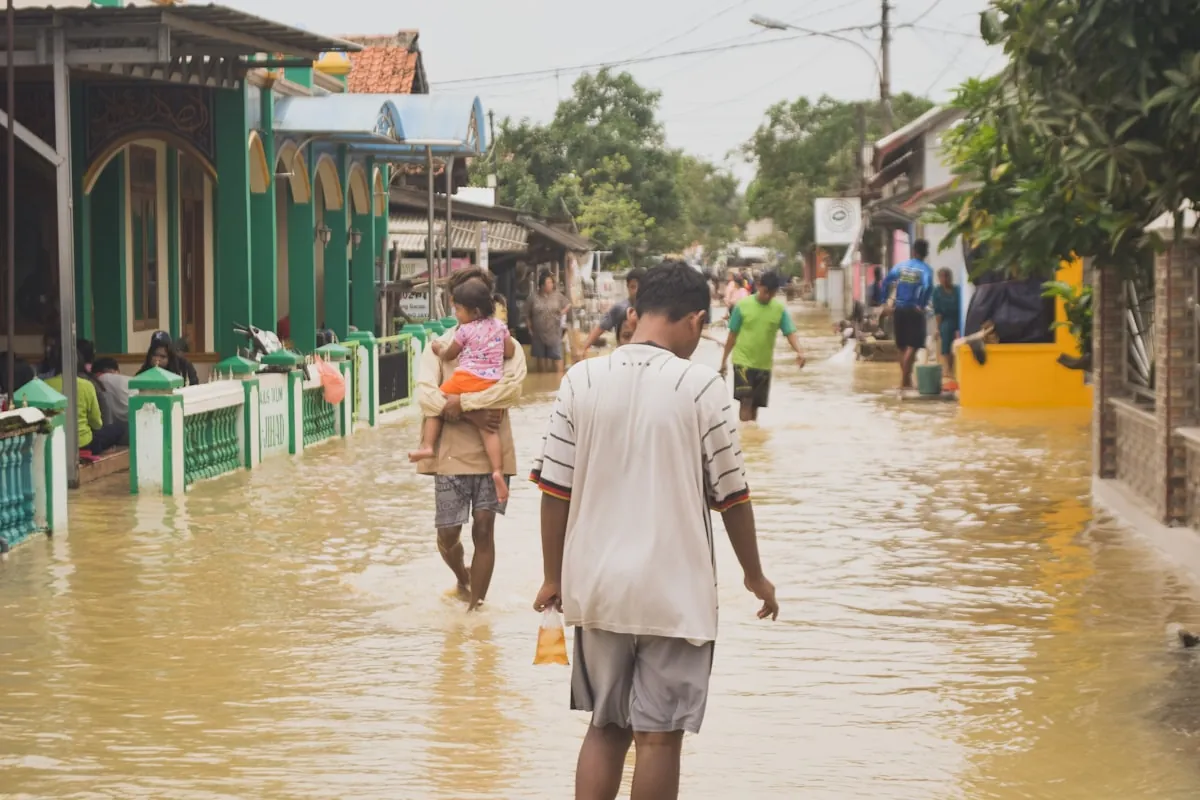
Hurricane Irma (September 2017) delivered the most dramatic demonstration in modern memory. Irma made landfall at Marco Island in southwest Florida but tracked across the entire state. As it approached Jacksonville, its wind field drove Atlantic Ocean water into the river mouth at Mayport from the east. The St. Johns crested at flood levels not recorded since 1846 — exceeding the record set by Hurricane Dora in 1965 by a significant margin. San Marco, Riverside/Avondale, Ortega, Mandarin, and downtown Jacksonville all flooded. Properties in Zone AE that had never flooded before saw water inside first-floor rooms.
Seven years after Irma, Jacksonville still carries legacy water damage from that event: properties where mitigation was incomplete or done without professional drying now show hidden mold in wall cavities, subfloor rot, and compromised structural connections — the long-term consequences of inadequate post-flood response. We have performed mold remediation on numerous Jacksonville homes years after Irma, where prior owners attempted DIY cleanup and the problem was discovered during a sale or renovation.
Jacksonville Flood Mechanisms
Tidal Backing (Year-Round)
High tides push upstream against river flow, raising levels in San Marco, downtown, and Riverside without any weather event. Spring tides and king tides are predictable — but still flood low-lying riverfront properties.
Riverine Rainfall Flooding
Heavy rain across the 9,800-sq-mile drainage basin fills tributaries — Ortega River, Julington Creek, Hogan Creek, McGirts Creek — which all drain to the St. Johns. A major rain event inland raises the river for days.
Hurricane Storm Surge (Atlantic)
Irma demonstrated this: Atlantic hurricanes can push water INTO the St. Johns from its mouth at Mayport. Onshore winds from a northeast-tracking storm create the worst surge scenario for Jacksonville.
Nor'easters & Winter Surge
November–March nor'easters drive sustained onshore winds that back up the river mouth and combine with king tides. Jacksonville experiences winter flooding events not typically associated with hurricane season.
Jacksonville’s Historic Neighborhoods — Water Damage by District
Jacksonville is the oldest large city in Florida. Its historic neighborhoods contain housing stock that requires specialist knowledge — construction methods, materials, and failure modes that differ fundamentally from modern tract homes.
Riverside & Avondale
Primarily built: 1900s–1920s
Jacksonville's most beloved historic district has Craftsman bungalows and Tudor Revival homes with original cast-iron drain lines, galvanized supply pipes, and plaster-over-lath walls. Flood risk from Willow Branch Creek and proximity to the St. Johns. Historic plaster and heart pine floors require non-destructive drying — we use cavity systems to preserve these irreplaceable materials.
Springfield
Primarily built: Late 1800s–early 1900s
Jacksonville's oldest neighborhood, listed on the National Register of Historic Places. Many homes date to the 1890s–1910s with balloon-frame construction, original wood floors, and clay sewer laterals. Moisture travels vertically in balloon-frame walls in unexpected ways. Springfield is adjacent to the Hogan Creek flood corridor — a tributary that backs up during high river events.
San Marco
Primarily built: 1920s–1940s
San Marco sits directly on the St. Johns River bend south of downtown. It flooded during Irma 2017. Mediterranean Revival architecture with tile roofs, stucco construction, and original casement windows. The business district and residential streets both experienced river flooding. Zone AE flood zone covers much of the neighborhood east of Hendricks Ave.
Ortega & Ortega Hills
Primarily built: 1920s–1950s
Affluent waterfront neighborhood on the Ortega River (St. Johns tributary). Persistent tidal backing affects low lots. Older estate homes with mature landscaping have root intrusion into clay sewer laterals. Ortega River-front properties require NFIP flood documentation in addition to standard HO claims.
Mandarin
Primarily built: 1960s–1980s + historic
South Jacksonville on the St. Johns' western bank, Mandarin flooded in Irma. Mix of 1960s-1970s ranch homes with aging CPVC supply lines and older properties near the water. Julington Creek subdivision areas have newer construction on former wetland fill — slab leaks common.
Jacksonville Beaches
Primarily built: Mixed, 1940s+
Atlantic Beach, Neptune Beach, and Jacksonville Beach face different risk: ocean-side surge from Atlantic storms (rather than river flooding). Salt air + humidity accelerates corrosion of plumbing fittings and HVAC components. Post-storm saltwater intrusion requires the same desiccant drying protocol as Miami's saltwater events.
Our Jacksonville Restoration Process
60-Min to All Jax Districts
Riverside, Avondale, San Marco, Springfield, Mandarin, Ortega, and the Beaches — 60-minute target. River flooding events: Cat 3 protocol deployed immediately.
Historic Material Assessment
Plaster walls, heart pine floors, cast-iron drain lines, balloon-frame cavities — documented before any demolition decision. Non-destructive approach where water category and timing allow.
Tidal & River Documentation
St. Johns flooding is river/tidal water — Cat 3. Zone AE flood-policy documentation. Source determination for standard vs. flood claim. Irma-legacy mold assessment on request.
Xactimate + Adjuster Coordination
Historic materials documented at replacement cost. Separate mitigation/restoration line items. NFIP and standard carrier communication. Supplement support when initial scope is inadequate.
Jacksonville Water Damage FAQ
How did Hurricane Irma flood Jacksonville so severely in 2017?+
Why do Jacksonville's historic neighborhoods have higher water damage risk?+
Is the St. Johns River flood risk only from hurricanes?+
Do you work on historic homes in Riverside and Springfield?+
This page was researched and produced in support of Brain b32bfc21 — The Florida Restoration Pros content development initiative. NAP: 1 Independent Dr, Ste 1100, Jacksonville, FL 32202 · (904) 371-7252.
Water damage in Jacksonville? River, tidal, or pipe — we respond 24/7.
Riverside, San Marco, Springfield, Avondale, Mandarin — 60-minute response across all Jacksonville districts.
☎ (904) 371-7252 — Available 24/7